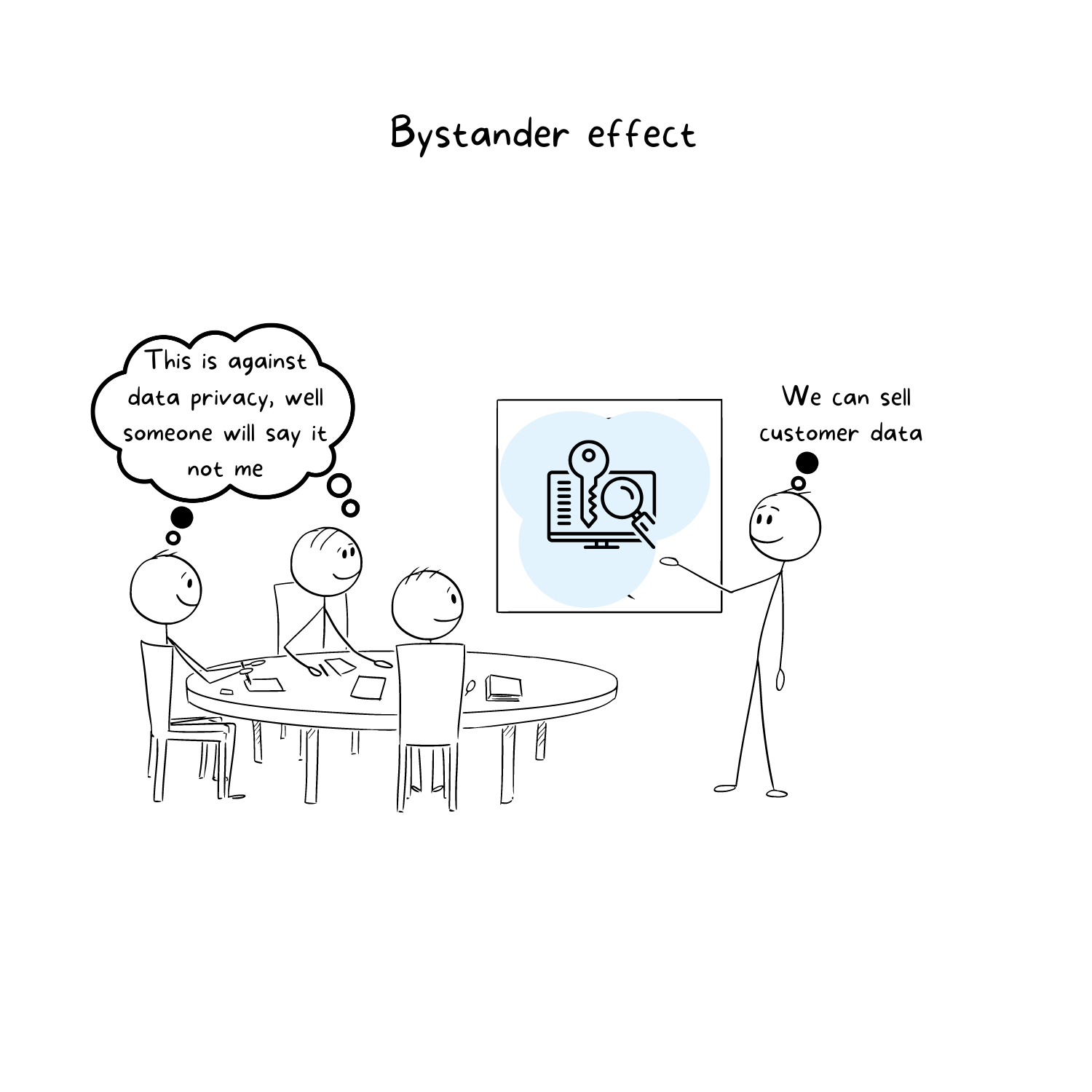

The bystander effect is a social phenomena where people are less likely to step in or offer assistance in a moment of need when others are around. It is a psychological occurrence that results from social influence and the distribution of blame. Several factors contribute to the bystander effect, including:
- Diffusion of Responsibility: When others are present, people tend to feel less responsible because they believe that someone else will take care of things or that their own efforts won’t really make a difference.
- Social Influence: People frequently look to other people for guidance on how to act in confusing circumstances. Individuals may interpret the lack of action by others as a sign that their own action or support is not required.
- Evaluation Apprehension: Individuals may hesitate to act due to fear of embarrassment, making a mistake, or being judged negatively by others. They may worry about the potential consequences of intervening or the social repercussions of getting involved.
Have you ever encountered a situation at work when one team member’s work is completely dependent on them and they aren’t taking responsibility for their responsibilities and outputs? You are aware of the issue, but choose not to speak about it?
Collaboration and shared accountability are the cornerstones of success in agile teams. The Bystander Effect presents a problem that could impede our development, though. Forging a truly collaborative and productive agile work environment requires comprehending and resolving this issue. The bystander effect is the tendency for people to depend on other people to take action or make decisions, which leads to a distribution of blame throughout a group. This might show up in agile teams as team members forgetting to speak up when problems arise, withholding criticism, or reluctance to take on tasks outside of their immediate purview.
The Bystander Effect must be addressed for agile teams for the following reasons:
Shared Responsibility:
Agile teams thrive on shared responsibility, in which each team member actively contributes to the project’s success. Recognizing that every team member is crucial to addressing issues, providing input, and guaranteeing the team’s advancement is necessary to overcome the bystander effect. We encourage everyone to actively contribute and take ownership of the team’s results by accepting shared responsibility.
Collaborative Environment:
Agile techniques promote teamwork, openness, and honest communication. Breaking the Bystander Effect encourages a collaborative atmosphere where team members feel at ease speaking up, exchanging ideas, and offering helpful criticism. Better decision-making, innovation, and ongoing development follow as a result inside the team.
Empowered Decision making
Agile teams must encourage members to take the initiative and contribute meaningfully if they hope to overcome the bystander effect. Agile team members should feel confident speaking up, challenging presumptions, and making improvements. The team gains from various viewpoints and a larger range of ideas when everyone actively participates.
Continuous Feedback:
Agile techniques encourage regular feedback loops, which enable teams to quickly adjust and advance. By addressing the Bystander Effect, we encourage team members to offer colleagues timely and helpful criticism. This feedback culture fosters a culture of learning and development, improves teamwork, and helps discover areas for improvement.
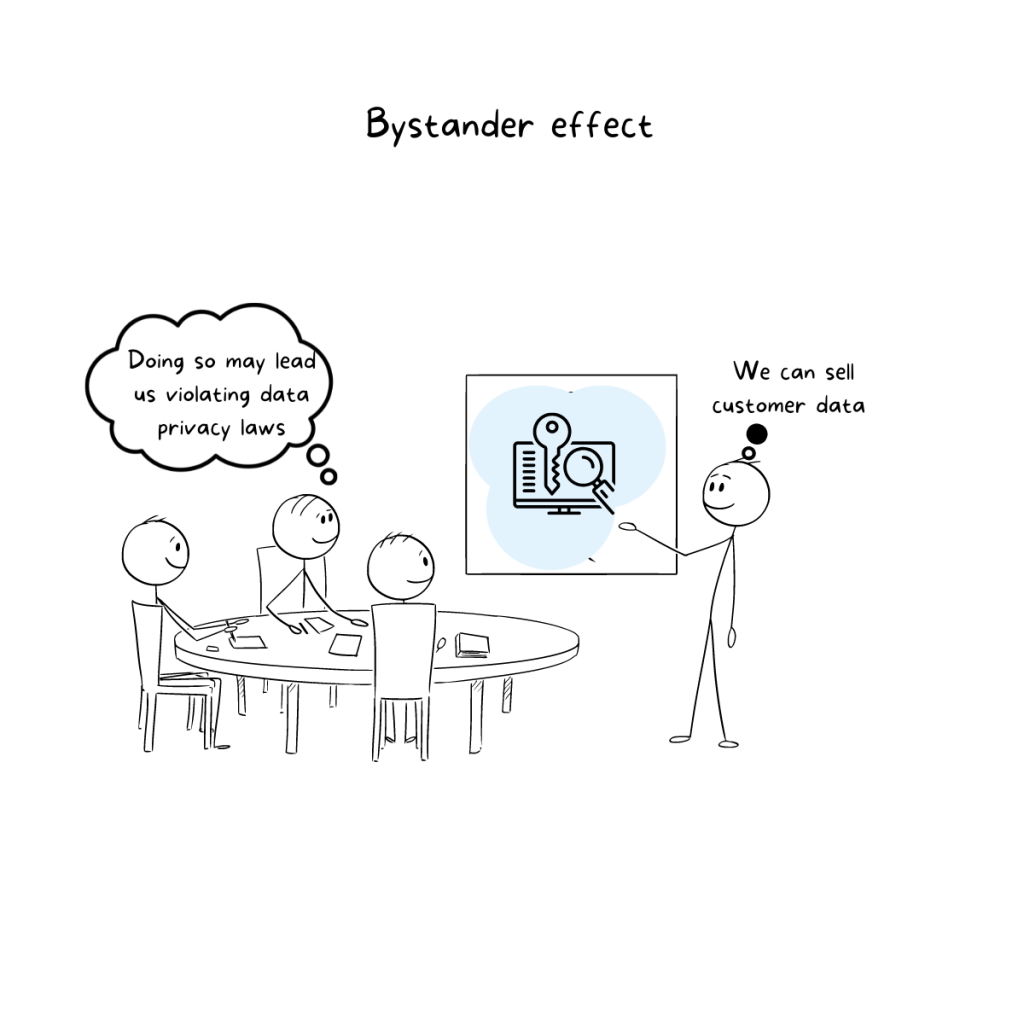
Breaking the cycle of bystander behavior in agile teams requires a shift in mindset and collective effort. It starts with recognizing that every team member plays a crucial role in addressing challenges, providing feedback, and taking ownership of the team’s outcomes. By fostering a culture of shared responsibility, individuals are empowered to actively participate, contribute their unique perspectives, and offer constructive feedback.
 someooow